

El miércoles pasado asistí y ayudé a administrar un chat de un directo. Dejé unos comentarios al invitado del directo, uno de ellos sobre unas reservas que tenía en torno al llamado “monoteísmo” del judaísmo. El invitado reaccionó con un tono un poco hostil, en el que decía que “eso era lo que yo creía”, pero que una creencia en un dios que mataba a todos los demás debía calificarse de “monoteísta”.
Con ese propósito, en TikTok y en YouTube, he dejado una respuesta más concisa y serena a esa reacción del invitado. La razón de por qué no indico cuál es el directo o su nombre es para no iniciar algún tipo de drama cibernético. En estos días es bien fácil crear un drama por cualquier cosa y especialmente debido a cuestiones como ésta.
Quiero que la respuesta se vea de la manera más cordial posible. Aquí está el vídeo.
Mi consulta a Carla Díaz y el caveat
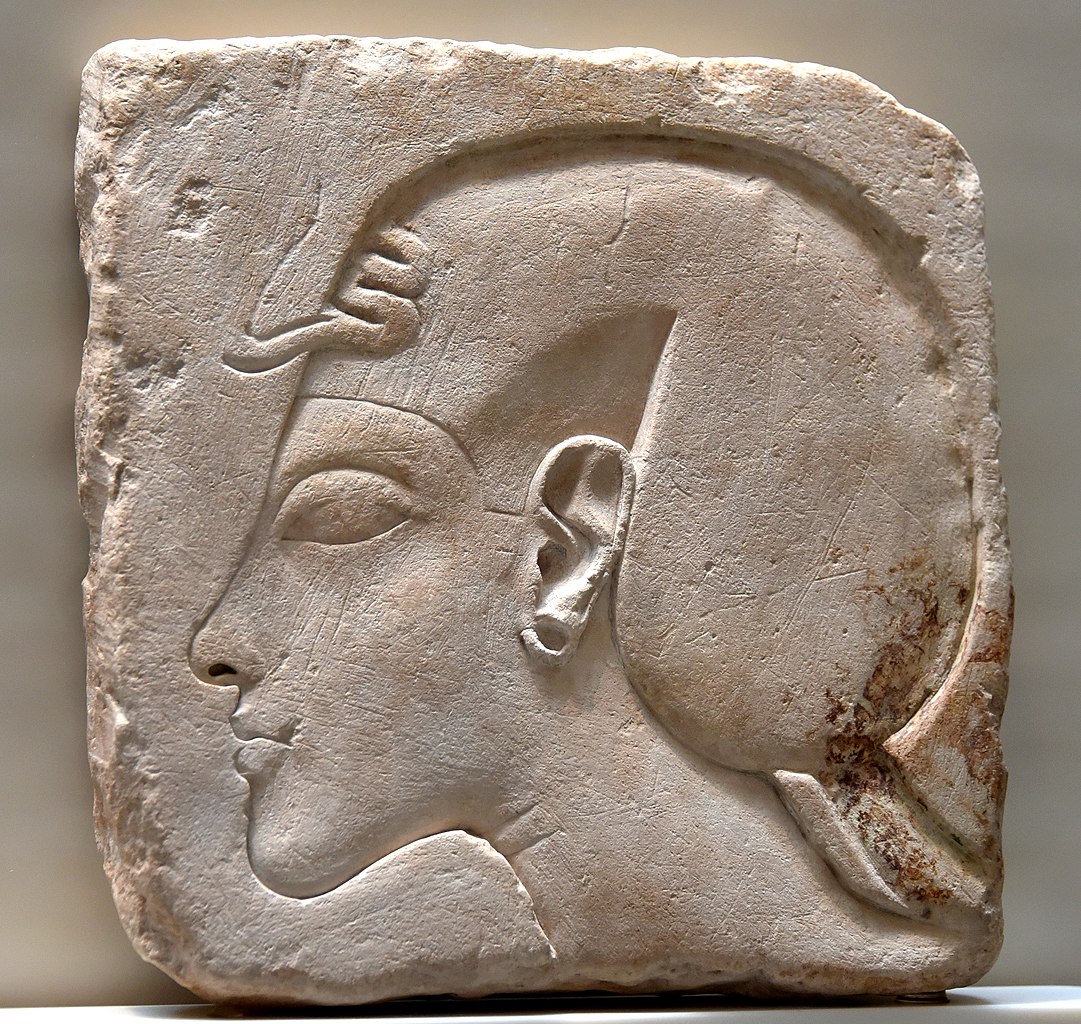
Como persona que apenas conoce lo más rudimentario de la egiptología, desde pequeño, siempre me ha llamado la atención el culto a Akhenatón debido a las implicaciones que aparentaba tener para el estudio de la Biblia. En la Iglesia siempre se ve a la Biblia Hebrea como propulsora del monoteísmo desde el mismo comienzo desde Abraham en adelante. Paulatinamente, en la medida en que me fui insertando en las ciencias bíblicas, he reevaluado esa visión, mirando con lujo de detalles muchos aspectos de ese culto, llevándome a la conclusión de que el culto de Atón impuesto por Akhenatón podía verse más como un henoteísmo que como un monoteísmo. El corazón del argumento es que cuando gobernó, se permitían los cultos a ciertos dioses públicamente y también continuaron existiendo los cultos privados a otros dioses.
Desde hace unos años hacia acá he visto alguna literatura que defiende la plausibilidad de lo que se ha descrito como un “proto monoteísmo” bajo ese reinado. En otros, para sorpresa, han visto el atenismo como una cierta forma de ateísmo (¿?). Por lo pronto, le consulté a Carla Díaz quien era la persona más accesible y mucho más conocedora de estos temas que yo, quien me confirmó la convicción de que probablemente el culto debe considerarse un henoteísmo.
Ahora bien, el caveat que debemos tener en consideración es que estas perspectivas todavía se continúan debatiendo. Hoy día, hay gente que ha hecho una revisión detallada de la evidencia disponible y concluye que el atenismo debe considerarse monoteísta (véase Redford 2013). Otros han resaltado que el asunto es bastante complejo para llegar a ciertas conclusiones (véase Taronas 2012).
Una vez más, al igual que cuando se habla del “monoteísmo” del judaísmo antiguo o de la Antigua Israel, debemos tener en cuenta que muchas de estas nociones llevan un significado impregnado de connotaciones contemporáneas judeocristianas. Por tanto, al calificar sistemas como “monoteístas”, “politeístas” o “henoteístas” (o más recientemente “megateístas”), debemos tener sumo cuidado en cuanto a los significados de estos términos y lo que esto implica tanto en los estudios académicos como en la labor divulgativa.
Referencias
Barker, Margaret. The Great Angel. A Study of Israel’s Second God. Westminster John Knox, 1992.
Ben-Tor, Amnon. La arqueología del Antiguo Israel. Cristiandad, 2004.
—. Hazor—Canaanite Metropolis: Israelite City. Biblical Archaeology Society, 2016.
Berthelot, Katell. Jews and Their Roman Rivals. Pagan Rome’s Challenge to Israel. Princeton University Press, 2021.
Bible’s Buried Secrets: Did God Have a Wife? Narrado por Liev Schreiber, presentado por Francesca Stavrakopoulou, episodio 2. British Broadcasting Corporation (BBC), 16 de marzo de 2011. www.bbc.co.uk/programmes/p00fpxmc.
Binger, Tilde. Asherah. Goddesses in Ugarit, Israel and the Old Testament. Sheffield Academic, 1997.
Chaniotis, Angelos. “Megatheism: The Search for the Almighty God and the Competition of Cults.” En One God. Pagan Monotheism in the Roman Empire. Ed. Stephen Mitchell, 112-140. Cambridge University Press, 2010.
Cline, Eric H. 1177 B.C.: The Year Civilization Collapse. Princeton UP, 2014.
Coogan, Michael D. y Cynthia R. Chapman. A Brief Introduction to the Old Testament: The Hebrew Bible in Its Context. Oxford University Press, 2015.
Dever, William G. Beyond the Texts. An Archaeological Portrait of Ancient Israel and Judah. SBL, 2017.
—. Did God Have a Wife? Archaeology and Folk Religion in Ancient Israel. William B. Eerdmans, 2005.
—. “Iron Age Epigraphic Material from the Area of Khirbet el-Kom.” Hebrew Union College Annual, vols. 40/41, 1969–1970, pp. 139–204.
—. Who Were the Early Israelites and Where Did They Come From. William B. Eerdmans, 2003.
Ehrman, Bart. D. How Jesus Became God. The Exaltation of a Jewish Preacher from Galilee. HarperCollins, 2014.
Feinman, Peter. The Exodus: An Egyptian Story. Oxbow, 2021.
Finkelstein, Israel y Amihai Mazar. The Quest for the Historical Israel. Debating Archaeology and the History of Early Israel. SBL, 2007.
Finkelstein, Israel y Neil Asher Silberman. The Bible Unearthed: Archaeology’s New Vision of Ancient Israel and the Origin of Its Sacred Texts. Ed. Google Books, Simon & Schuster, 2001.
Fredriksen, Paula. Pablo el judío, apóstol de los paganos. Ediciones Sígueme, 2019.
Friedman, Richard E. The Exodus. HarperOne, 2017.
García Martínez, Florentino. Textos de Qumrán. Editorial Trotta, 1993.
Garrett, Susan R. No Ordinary Angel. Celestial Spirits and Christian Claims about Jesus. Yale University Press, 2008.
Gómez Segura, Eugenio. “Asherah (2)”. El blog de Antonio Piñero. www.religiondigital.org/el_blog_de_antonio_pinero/Asherah_7_2230346968.html.
Gordon, Robert. “Standing in the Council: When Prophets Encounter God.” En The God of Israel. Editado por Robert P. Gordon, 190-204. Cambridge University Press, 2007.
Heiser, Michael S. “Are Yahweh and El Distinct Deities in Deut. 32:8-9 and Psalms 82?” Hiphil 3 (2006): 1-9. https://digitalcommons.liberty.edu/lts_fac_pubs/278
—. “The Divine Council in Late Canonical and Non-Canonical Second Temple Jewish Literature.” Tesis de Ph.D., University of Wisonsin-Madison, 2004.
—. “Monotheism, Polytheism, Monolatry, or Henotheism? Toward an Assessment of Divine Plurality in the Hebrew Bible.” Bulletin for Biblical Research 18, núm. 1 (2008): 1–30. https://digitalcommons.liberty.edu/lts_fac_pubs/277
—. The Unseen Realm. Recovering the Supernatural Worldview of the Bible. Lexham Press, 2015.
Levy, Thoas E., Thomas Schneider y William H. C. Propp, editores. Israel’s Exodus in Transdisciplinary Perspective: Text, Archaeology, Culture, and Geoscience, Springer, 2015. https://doi.org/10.1007/978-3-319-04768-3
MacDonald, Nathan. Deuteronomy and the Meaning of Monotheism. Mohr Siebeck, 2003.
McClellan, Daniel O. YHWH’s Divine Images. A Cognitive Approach. SBL Press, 2022.
—. “‘You Will Not Like the Gods’: The Conceptualization of Deity in the Hebrew Bible in Cognitive Perspective.” Tesis de M. A., Trinity Western University, 2013.
Meshel, Ze’ev. “Kuntillet ’Ajrud. An Israelite Religious Center in Northern Sinai.” Archaeology and Fertility Cult in the Ancient Mediterranean: Papers Presented at the First International Conference on Archaeology of the Ancient Mediterranean, University of Malta, 2–5 September 1985., editado por Anthony Bonanno, B.R. Grüner, 1986, pp. 50-54.
Mitchell, Gordon. “Monotheism, Henotheism, Megatheism: Debating Pre-Constantinian Religious Change.” Journal of Roman Archaeology 27 (2014): 665–676. https://doi.org/10.1017/S104775941400172X
Moore, Megan Bishop y Brad E. Kelle. Biblical History and Israel’s Past: The Changing Study of the Bible and History. William B. Eerdmans, 2011.
Morgan, Teresa. Roman Faith and Christian Faith. Pistis and Fides in the Early Roman Empire and Early Churches. Oxford University Press.
Olmo Lete, Gregorio del. Estudios de intertextualidad semítica noroccidental. Hebreo y ugarítico. Universitat de Barcelona Edicions, 2015.
Olyan, Saul M. 2012. “Is Isaiah 40-55 Really Monotheistic?” Journal of Ancient Near Eastern Religions 12 (2012): 190-201.
“Oráculos Sibilinos.” En Apócrifos del Antiguo Testamento: Tomo III. Ed. Alejandro Díez Macho, Trad. E. Suárez de la Torre, 241-396. Ediciones Cristiandad, 1982.
Orlov, Andrei. The Enoch-Metatron Tradition. Mohr Siebeck, 2005.
—. The Glory of the Invisible God. Two Powers in Heaven Traditions and Early Christology. T & T Clark, 2019.
Redford, Donald. “Akhenaten: New Theories and Old Facts.” Bulletin of the American Schools of Oriental Research 369 (mayo de 2013): 9-34. https://doi.org/10.5615/bullamerschoorie.369.0009
Shaw, Ian y Robert Jameson, editores. A Dictionary of Archaeology. Wiley-Blackwell, 2002.
Taronas, Laura. “An Analysis of the Pharaoh Akhenaten’s Religious and Philosophical Revolution.” Disert. de honor, Tufts University, 2012.
Toorn, Karel van der. Family Religion in Babylonia, Syria and Israel: Continuity and Change in the Forms of Religious Life. SBL, 2017.
Zuckerman, Sharon. “Anatomy of a Destruction: Crisis Architecture, Termination Rituals and the Fall of Canaanite Hazor.” Journal of Mediterranean Archaeology, vol. 20, núm. 1, 2007, pp. 3-32
—. “Ruin Cults at Iron Age I Hazor”. The Fire Signals of Lachish. Studies in the Archaeology and History of Israel in the Late Bronze Age, Iron Age, and the Persian Period in Honor of David Ussishkin, editado por Israel Finkelstein y Nadav Na’aman. Eisenbrauns, 2011, pp. 387-394.
 Escéptico Humanista
Este artículo de Thom Stark me parece que aclara bastante el tema del desarrollo del monoteísmo en Israel.
http://religionatthemargins.com/2011/07/the-most-heiser-yahweh-and-elyon-in-psalm-82-and-deuteronomy-32
La diferencia entre politeísmo y monoteísmo es más una cuestión de qué tan alejado está el dios principal de los otros dioses (en cuanto a poder y otros atributos).
Respecto a Yahvé matando a “todos los dioses”, no he visto el directo pero asumo que se refiere a Salmo 82. Como bien explica Thom Stark en su artículo, en ese Salmo quien está a la cabeza de la asamblea de dioses no es Yahvé, sino El (su padre). Yahvé sentencia a morir a los otros dioses (¿y tal vez los mata el mismo en combate?), pero obviamente no mata a su padre El. Eso es politeísmo, por donde lo veamos.
LikeLiked by 1 person